
What Are the Biggest Marketing Mistakes Fly Fishing Businesses Make?
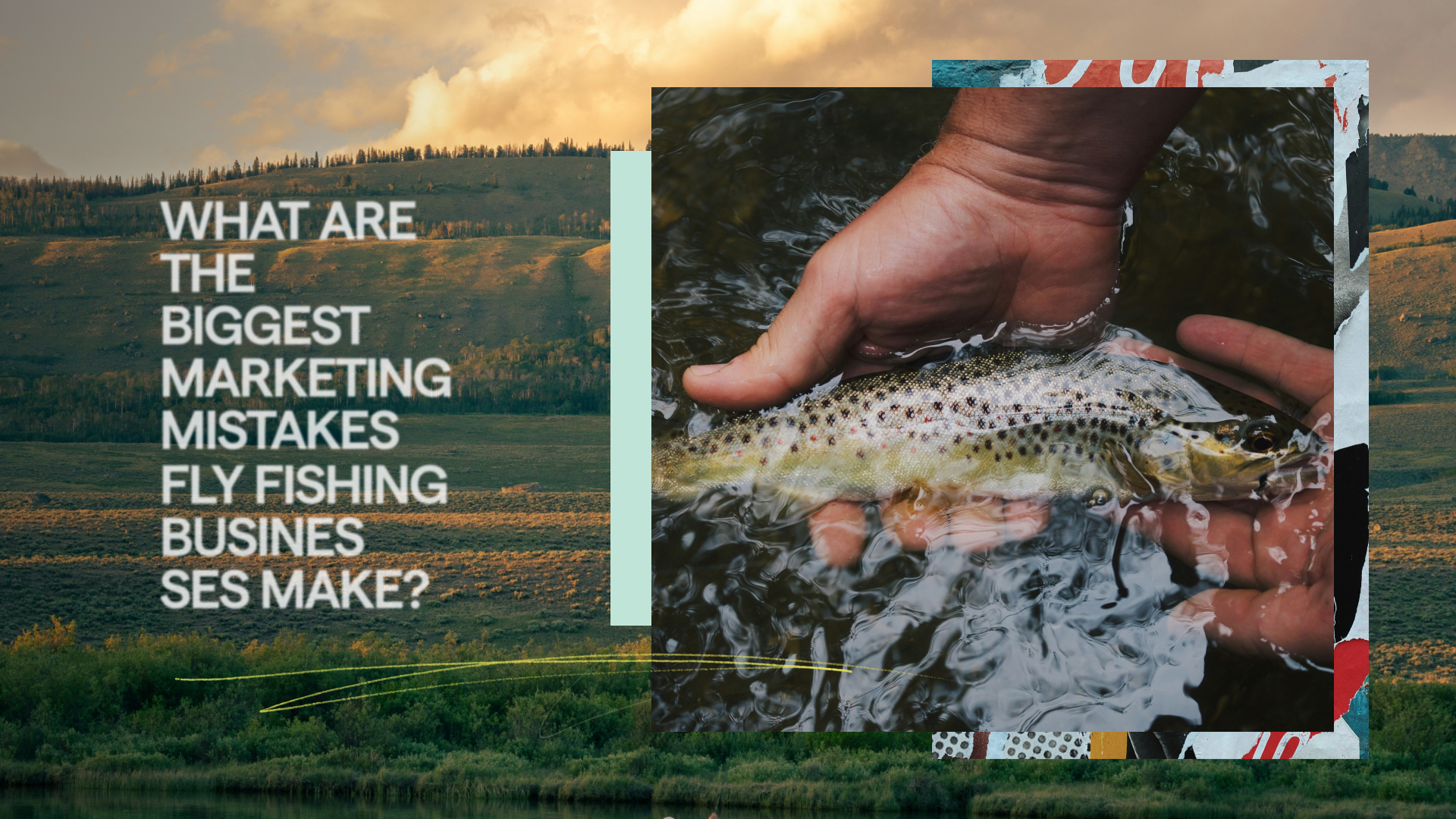
The biggest marketing mistake fly fishing businesses make is treating marketing as something you do when bookings slow down, rather than a system that runs all the time.
But that's just the start. After working with fly fishing guides, lodges, fly shops, brands, and conservation nonprofits, Good Drift sees the same handful of mistakes come up over and over. None of them are complicated to fix. Most of them are things a business owner can address in a weekend. The problem is that nobody points them out until the damage is already showing up in empty calendar slots and unanswered inquiry forms.
Here are the five mistakes we see most often.
Marketing Only When Business Slows Down
This is the most common pattern we see in fly fishing businesses. A guide has a great season, stays busy on the water, and stops thinking about marketing entirely. Then the off-season hits, bookings dry up, and suddenly it's time to "figure out marketing."
The problem is that marketing built in a panic doesn't compound. It takes time for a new website to get indexed by Google. It takes months for SEO and content to gain traction. It takes consistency for social media to build any kind of following. Starting from scratch every off-season means you're always behind.
The businesses that stay booked year after year treat marketing like maintaining a boat. You don't wait until something breaks. You keep it running so it's ready when you need it. That means updating your website, posting fishing reports, collecting reviews, and staying visible even during your busiest months. It doesn't take hours a day. It just takes consistency.
Skipping the Foundation
A surprising number of fly fishing businesses still don't have the basics in place. And by basics, we mean the things that cost nothing or next to nothing but do the most heavy lifting.
No Google Business Profile. Or one that was claimed three years ago and never updated. GBP is often the first thing a potential client sees when they search for a guide or shop in your area. If your listing has no photos, no reviews, and outdated hours, you're losing people before they ever get to your website.
A website that doesn't work. Not "doesn't look amazing." Doesn't work. Missing pricing, no way to book, broken pages, no information about where you actually operate. We've seen guide websites where the homepage is a single photo with no text. No location, no species, no description of the experience. The guide might be incredible on the water, but a first-time visitor has no way to know that.
No reviews strategy. Happy clients are your best marketing asset, but most guides never ask for a review. A simple follow-up text with a direct link to your Google profile, sent the same day the trip ends, is all it takes. Reviews build trust with new clients and directly improve your local search rankings.
These aren't advanced tactics. They're the foundation. And skipping them means everything you build on top (social media, ads, content) works harder than it should.
Building on Rented Land
A lot of fly fishing businesses put all their energy into platforms they don't control.
Instagram is the most common example. A guide spends years building a following, posting great content, and engaging with the community. Then the algorithm changes, reach drops, and suddenly the audience they built isn't seeing their posts anymore. It's not that Instagram doesn't matter. It does. But it shouldn't be your only channel.
The same applies to third-party booking platforms. They bring in clients you might not reach on your own, but every booking through a platform is a client whose email you don't own, whose review goes on someone else's profile, and who might book a different guide next time because the platform suggested them.
The fix isn't to abandon these tools. It's to build things you own alongside them. An email list. A website with content that ranks in search. A Google Business Profile that works for you 24/7. These are assets that don't disappear when a platform changes its rules.
Trying to Do It All Yourself
Most fly fishing business owners wear every hat. You're the guide, the bookkeeper, the photographer, the social media manager, and the customer service department. Marketing ends up being the thing you get to when everything else is done. Which means it rarely gets done well.
The result is a cycle that looks like this: you know your website needs work, but you're not sure where to start. You hear you should be doing SEO, but you don't have time to learn it. You try posting more on social media, but it feels random and you're not sure it's doing anything. Eventually you get frustrated and stop.
This isn't a motivation problem. It's a bandwidth problem. Marketing requires consistency, and consistency is hard when you're running trips six days a week during the season.
There are two ways to break the cycle. The first is to simplify. Pick one or two things from the foundation (website, GBP, reviews) and focus there. Don't try to do everything at once. The second is to partner with someone who knows the space and can handle the parts you don't have time for. Either way, the goal is a system that runs without requiring you to think about marketing every day.
Thinking Marketing Means Social Media
Social media is one piece of a larger marketing strategy. It's not the strategy itself.
We talk with fly fishing business owners who say "I'm doing marketing" and mean "I'm posting on Instagram." That's visibility, and it matters, but it's not a system. It doesn't bring in clients who've never heard of you. It doesn't show up when someone searches Google for a guide in your area. It doesn't capture email addresses or build long-term SEO value.
The businesses that grow consistently have a few things working together: a website that converts, a Google presence that gets found, content that compounds over time, and an email list that keeps past clients coming back. Social media supports all of that. It doesn't replace it.
These Are All Fixable
None of these mistakes require a massive budget or a marketing degree to fix. Most of them come down to building simple systems and sticking with them.
Start with the foundation. Be consistent. Build things you own. And if you're not sure which mistake is costing you the most, reach out to Good Drift. We'll give you a straight answer.
