
Where Should a Fishing Business Start with Digital Marketing?
The best starting point for digital marketing for fishing guides, fly shops, lodges, and outfitters is the same: your website. Not social media. Not paid ads. Not a booking platform. Your website is the foundation everything else gets built on, and if it doesn't work, nothing you add on top of it will either. Most fishing businesses skip this step or rush through it, and then wonder why their Instagram following isn't turning into bookings or foot traffic.
Good Drift works exclusively with fly fishing businesses, and the pattern we see is the same almost every time. A guide, shop owner, or lodge comes to us after spending months and money on tactics that didn't produce results. The problem is rarely the tactic itself. It's the order. Digital marketing has a sequence to it, and when you skip steps, you waste budget on things that can't work yet.
Why Does the Starting Point Matter?
Most digital marketing advice treats every tactic as equally important. SEO, Google Ads, Instagram, email, content marketing, Google Business Profile. It's a lot. And when everything feels urgent, the natural instinct is to try all of it at once or just pick whatever seems easiest.
Neither works.
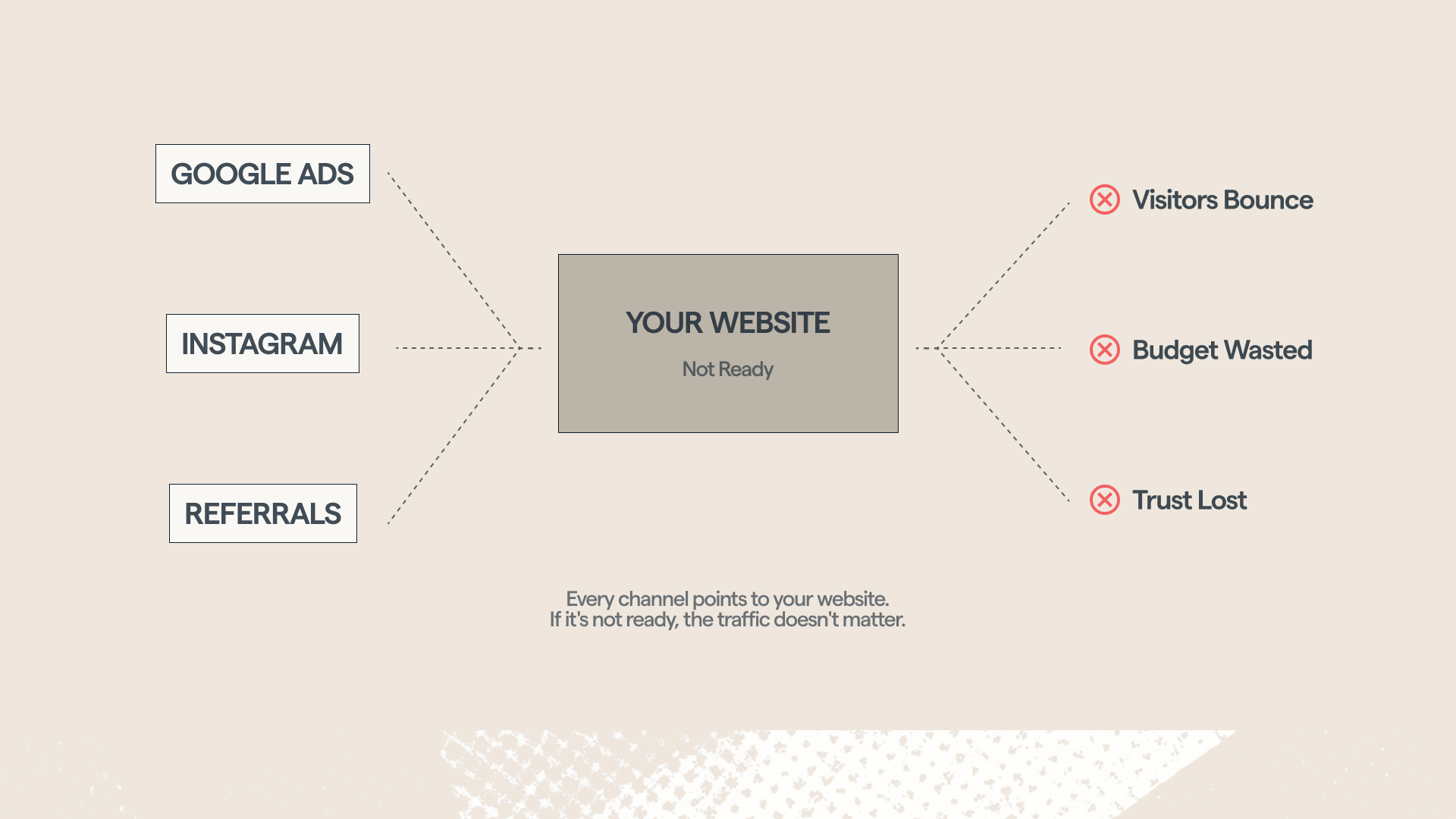
Each layer of your online presence depends on the one below it. Paid ads send people to your website. If the website doesn't answer their questions or make it easy to book or buy, those clicks are wasted money. Social media drives awareness. But awareness without a clear place to land just creates curiosity with no payoff.
Think of it the way you'd think about rigging up. You wouldn't tie on a fly before you've strung your rod. Every step depends on the one before it. Digital marketing works the same way.
What Should a Fishing Business Build First?
Your website. And not just any website. One that actually does the job.
Whether you're a guide, a fly shop, or an outfitter, your website needs to do three things well.
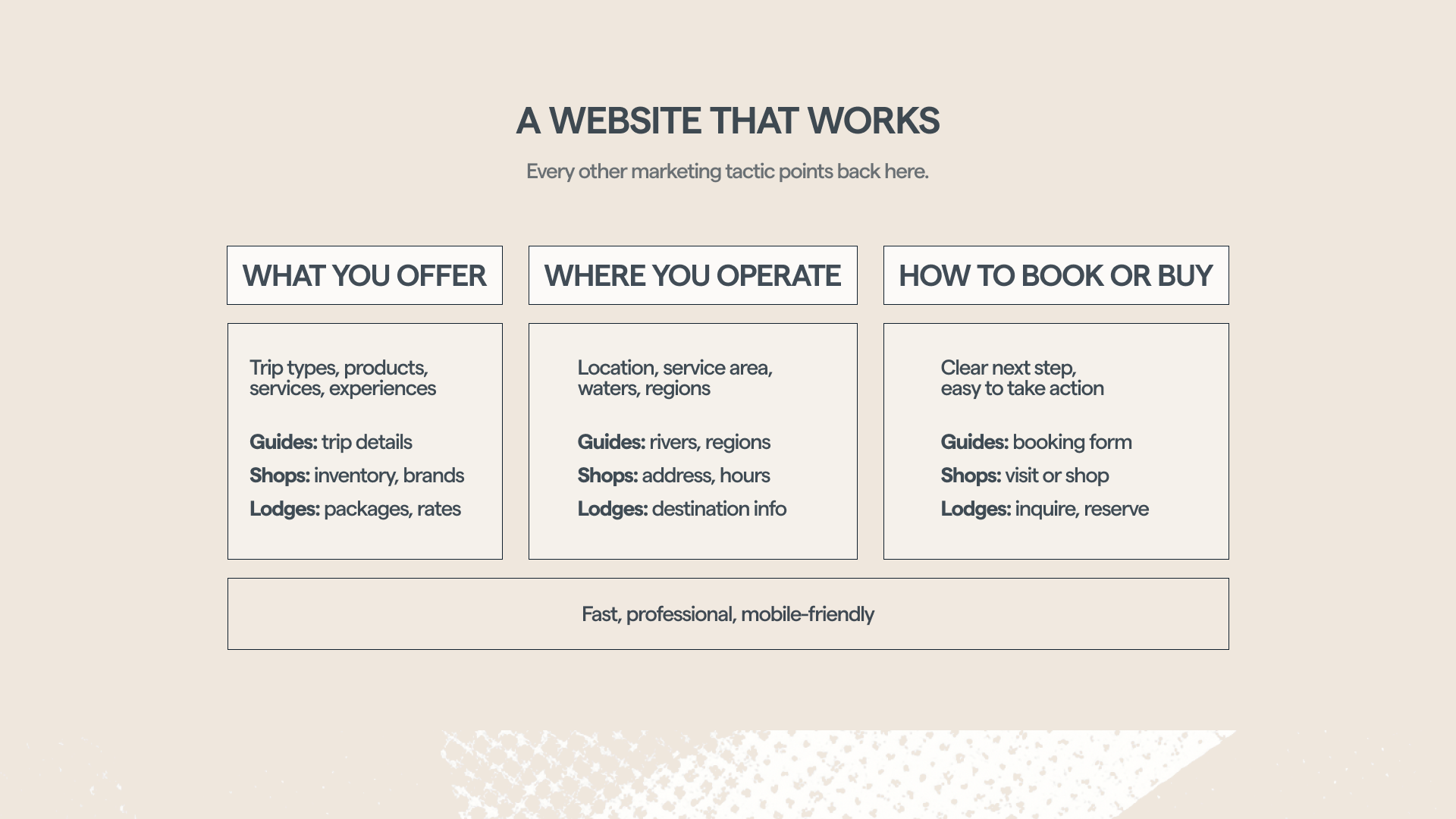
It needs to tell people what you offer, where you operate, and how to take the next step. For a guide, that means trip types, location, and a way to book. For a fly shop, it means products, hours, location, and a reason to visit. For a lodge, it means the experience, rates, and availability. Simple, but most fishing business websites miss at least one of these.
Some are beautiful but have no clear call to action. Others list every detail about the owner's background but forget to mention what the customer actually gets. Some don't even work properly on a phone, which is where most potential clients are looking.
Your website is the hub that every other piece of marketing points back to. An ad clicks through to it. A Google search result links to it. A friend texts your URL to someone planning a trip. If the site doesn't build confidence and make the next step obvious, every other marketing effort loses its effectiveness.
Before you spend a dollar on anything else, make sure your website loads fast, looks professional, works on mobile, and makes it dead simple to take action. That's the foundation.
What Comes After the Website?
Once the website works, the next priority is making sure people can actually find it. That means SEO and local discoverability.
For guides and charters, this starts with your Google Business Profile. When someone searches "fly fishing guide near me" or "fly shop in Bozeman," Google's map results are often the first thing they see. If you don't have a profile set up and optimized, you're invisible in those results. It's free and takes less than an hour. There's no reason not to.
For fly shops and outfitters, local SEO matters just as much. Your Google Business Profile, your hours, your reviews, and the way your website describes your location and services all help you show up when someone nearby is looking for what you sell.
After that, basic SEO on your website matters more than most fishing businesses realize. Your page titles, meta descriptions, and the actual words on your pages help Google understand what you do and where you do it. If your homepage title just says "Welcome" instead of something specific to your business and location, you're giving up free visibility.
Then comes content. Blog posts, fishing reports, seasonal updates, gear guides. Content does two things at once. It builds trust with potential customers before they ever pick up the phone or walk through the door. And it gives Google more pages to index, which strengthens your search presence over time. Consistency matters more than frequency. A fishing report once a month or a blog post every quarter is enough to start building momentum.
This layer takes patience. SEO isn't instant. But unlike ads, it compounds. The work you do today keeps paying off six months and a year from now. That's why we encourage every fishing business to invest in SEO early, even if the results feel slow at first.
When Is a Fishing Business Ready for Paid Ads?
When the foundation is solid. Not before.
Paid advertising is powerful. Google Ads can put you in front of people actively searching for exactly what you offer. But ads are an accelerant. They amplify whatever they point to. If your website converts well, ads drive bookings and sales. If your website is confusing, slow, or missing key information, ads just drive expensive traffic that bounces.
The fishing businesses that get the best return on ad spend are the ones who built the other layers first. Their website is clean and professional. Their Google Business Profile is active with photos and reviews. Their search presence is growing organically. When they turn on ads, they're accelerating a system that already works.
If someone tells you to start with ads before any of that is in place, they're selling you the most profitable service for them, not the most effective strategy for you.
You Don't Have to Do Everything at Once
The biggest mistake fishing businesses make with digital marketing isn't choosing the wrong tactic. It's trying to do everything at the same time with limited hours and budget.
Start with your website. Get it right. Then set up your Google Business Profile. Then start building content. Then consider ads. Each step reinforces the last.
That sequence is the same whether you're a solo guide running trips out of a drift boat, a fly shop with a retail floor and a guide program, or a lodge operation with a full calendar to fill. The scale changes. The order doesn't.
If you're not sure where your digital marketing stands right now, or you want a second opinion on what to prioritize next, we're happy to take a look. Good Drift works exclusively with fly fishing businesses, and this is exactly the kind of conversation we have every day.
